
Automate Before You Build Custom Software
How to spot the workflows worth automating before investing in a full custom software system.
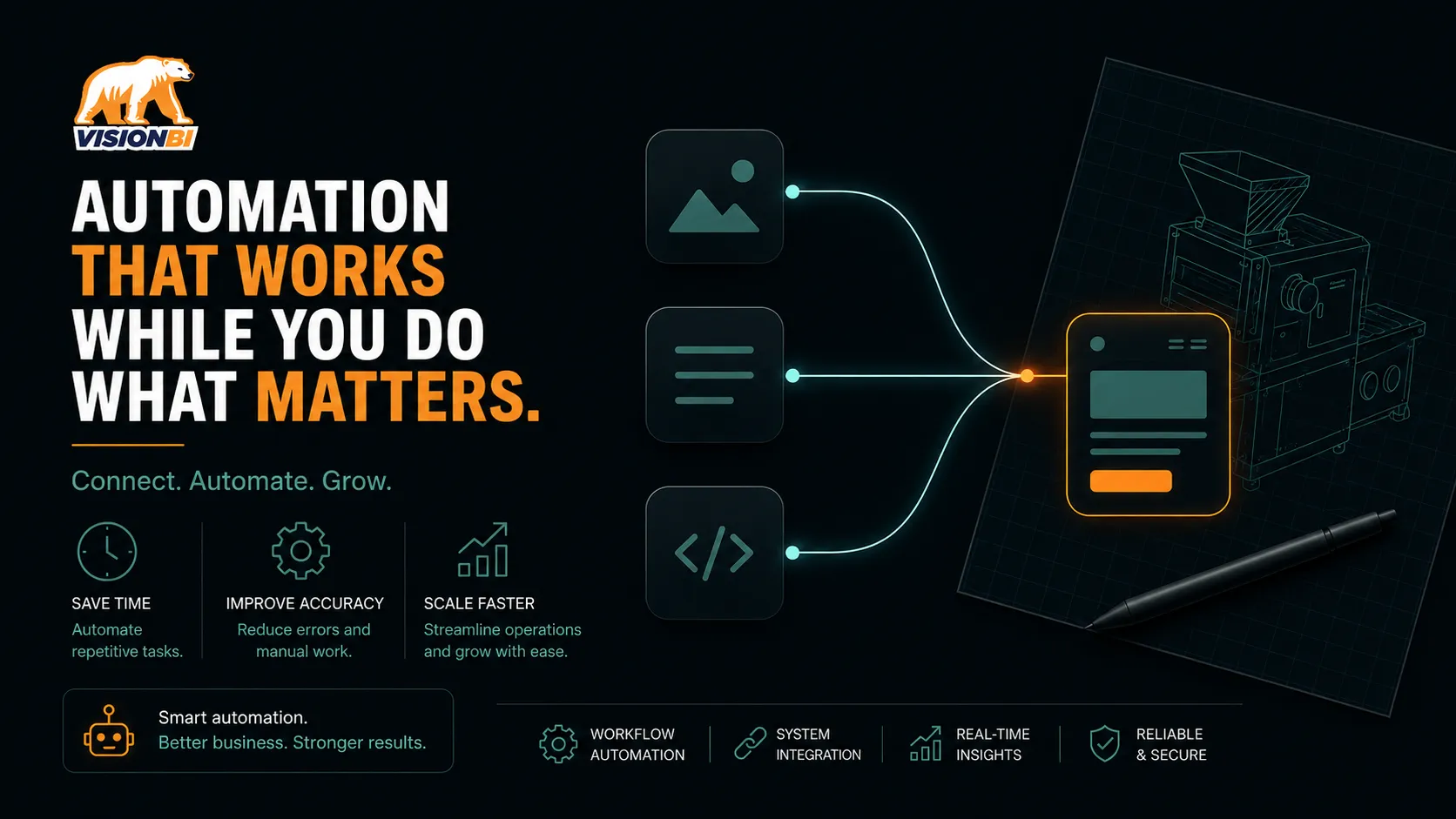
Custom software is powerful, but it is not always the first step. Many businesses get a better return by automating a focused workflow before committing to a larger system.
That first automation becomes a low-risk way to learn how the business really works.
Look for repeated handoffs#
The best automation candidates usually sit between people, tools or departments. They are the places where information gets copied, renamed, checked or chased.
Common examples include:
- Website enquiry to CRM.
- Quote request to internal spreadsheet.
- Invoice approval to accounting system.
- Support message to follow-up task.
Define the decision rules#
Automation works when the rules are clear enough to describe. If every task needs human judgment, the first improvement may be a better dashboard or checklist instead.
Useful questions to ask#
Ask the team:
- What do we do the same way every week?
- Where do errors happen?
- Which manual task delays revenue?
- Which spreadsheet would break the business if it disappeared?
Build the smallest reliable version#
Start with one workflow and make it dependable. A small automation that runs every day is more valuable than a large system that is hard to trust.
The goal is not to remove people from the process. The goal is to remove avoidable admin from valuable people.
When custom software becomes the right move#
Once several workflows depend on the same data, a custom system can become the cleaner option. At that point, you are not guessing. You already know the process, the bottlenecks and the business case.
Manual workflow -> focused automation -> shared system -> measurable operating advantageThat path keeps risk low while still moving the business toward a stronger digital foundation.
Tell us what you need.
Share the outcome you want and we’ll recommend the simplest path forward.
Tell us what you need